What does 1,000 kcal look like?
Last updated: Oct 27, 2026
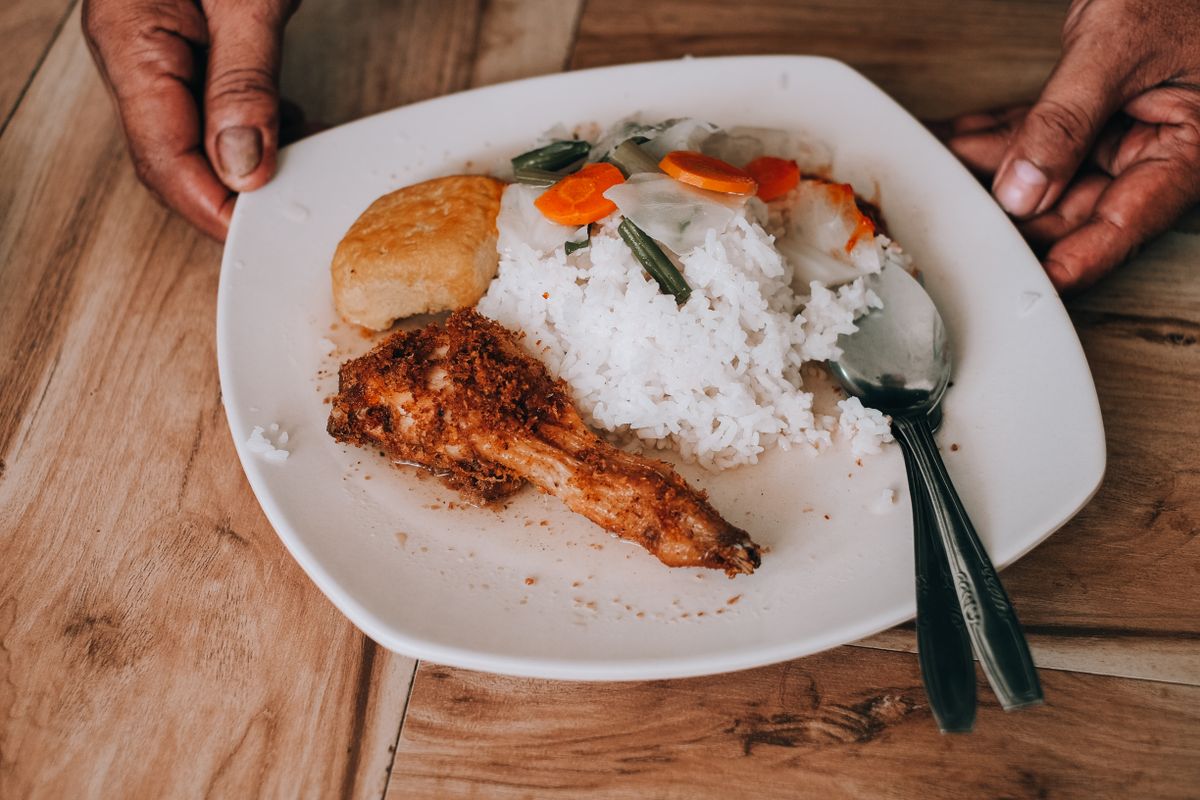
Illustrative photo.
What can 1,000 kcal look like on a food list? Below are four meal combinations and two single-food examples, each calculated to provide approximately 1,000 kcal. A kilocalorie (kcal) is the unit commonly called a food calorie.
The examples have the same calculated energy but different weights, ingredients and protein totals. The bars compare grams of food; they are not pictures of plate size. The hero photo is illustrative, not a photograph of an exact 1,000 kcal portion.
These are examples for understanding quantities, not recommended meal sizes or a daily calorie target. All listed ingredients count toward the total, including oil and milk. Additions such as sauces and drinks would need to be counted separately.
Six examples of approximately 1,000 kcal
Same energy, different weights
Each example supplies approximately 1,000 kcal. The chart shows total food weight in grams, including the water already in the listed foods. Select a bar to see its portion details.
Chicken, rice and broccoli
781 g of food
Chicken is weighed roasted and skinless; rice and broccoli are weighed cooked. The listed olive oil is included in the energy total.
| Food and weighed state | Weight | kcal |
|---|---|---|
| Chicken breast, roasted, skinless | 202 g | 334 |
| White long-grain rice, cooked | 337 g | 438 |
| Broccoli, boiled and drained, without salt | 225 g | 79 |
| Olive oil | 17 g | 149 |
≈ 1,000 kcal
≈ 77 g protein
Lentil, rice and avocado bowl
871 g of food
Lentils and brown rice are weighed cooked. Avocado and tomato are raw edible portions. The olive oil can be used as a dressing.
| Food and weighed state | Weight | kcal |
|---|---|---|
| Lentils, boiled, without salt | 286 g | 332 |
| Brown long-grain rice, cooked | 286 g | 352 |
| Avocado, raw, flesh only | 115 g | 183 |
| Tomato, raw | 172 g | 31 |
| Olive oil | 12 g | 102 |
≈ 1,000 kcal
≈ 37 g protein
Salmon, potatoes and broccoli
848 g of food
Salmon is weighed after dry-heat cooking. Potatoes are weighed boiled with skins removed; broccoli is boiled and drained. Include all the listed oil.
| Food and weighed state | Weight | kcal |
|---|---|---|
| Atlantic farmed salmon, cooked with dry heat | 197 g | 406 |
| Potatoes, boiled in skin, flesh only, without salt | 437 g | 381 |
| Broccoli, boiled and drained, without salt | 197 g | 69 |
| Olive oil | 16 g | 145 |
≈ 1,000 kcal
≈ 56 g protein
Oats, milk, banana and peanut butter
612 g of food
Oats are weighed dry. Milk is weighed in grams; banana is peeled. No additional water or toppings are included in the weight or energy total.
| Food and weighed state | Weight | kcal |
|---|---|---|
| Oats, regular or quick, dry, unfortified | 122 g | 464 |
| Whole milk, 3.25% fat, vitamin D added | 306 g | 186 |
| Banana, raw, peeled | 147 g | 131 |
| Peanut butter, smooth, without salt | 37 g | 219 |
≈ 1,000 kcal
≈ 35 g protein
Almonds on their own
173 g of food
A single-food comparison using edible almond kernels, without added oil or coatings.
| Food and weighed state | Weight | kcal |
|---|---|---|
| Almonds | 173 g | 1,000 |
≈ 1,000 kcal
≈ 37 g protein
Cooked white rice on its own
769 g of food
Weigh cooked rice, not dry rice. No butter, oil or sauce is included.
| Food and weighed state | Weight | kcal |
|---|---|---|
| White long-grain rice, cooked | 769 g | 1,000 |
≈ 1,000 kcal
≈ 21 g protein
How the portions were calculated
For a single food, weight in grams = target ÷ the amount per 100 g × 100. For a meal, we added up the ingredients, then scaled every weight by the same factor to reach the target. Displayed values are rounded to the nearest whole unit. Calculations and calculator links retain greater precision, so rounded rows may differ slightly from the rounded total.
These are calculations from selected USDA records, not laboratory measurements of your food. Brands, varieties, preparation and water content change the results. Weigh only the edible parts, in the state listed. Include any additional oil, sauce, toppings or drinks separately. Examples illustrate quantities, not recommended serving sizes or daily targets.
USDA records and rounded values (per 100 g)
Data checked 2026-10-27. Energy uses USDA nutrient 1008 (kcal); protein uses nutrient 1003 (g).
- Chicken, broilers or fryers, breast, meat only, cooked, roasted (FDC 171477) — 165 kcal; 31 g protein per 100 g.
- Rice, white, long-grain, regular, enriched, cooked (FDC 168878) — 130 kcal; 3 g protein per 100 g.
- Broccoli, cooked, boiled, drained, without salt (FDC 169967) — 35 kcal; 2 g protein per 100 g.
- Oil, olive, salad or cooking (FDC 171413) — 884 kcal; 0 g protein per 100 g.
- Lentils, mature seeds, cooked, boiled, without salt (FDC 172421) — 116 kcal; 9 g protein per 100 g.
- Rice, brown, long-grain, cooked (Includes foods for USDA's Food Distribution Program) (FDC 169704) — 123 kcal; 3 g protein per 100 g.
- Avocados, raw, all commercial varieties (FDC 171705) — 160 kcal; 2 g protein per 100 g.
- Tomatoes, red, ripe, raw, year round average (FDC 170457) — 18 kcal; 1 g protein per 100 g.
- Fish, salmon, Atlantic, farmed, cooked, dry heat (FDC 175168) — 206 kcal; 22 g protein per 100 g.
- Potatoes, boiled, cooked in skin, flesh, without salt (FDC 170438) — 87 kcal; 2 g protein per 100 g.
- Cereals, oats, regular and quick, not fortified, dry (FDC 173904) — 379 kcal; 13 g protein per 100 g.
- Milk, whole, 3.25% milkfat, with added vitamin D (FDC 171265) — 61 kcal; 3 g protein per 100 g.
- Bananas, raw (FDC 173944) — 89 kcal; 1 g protein per 100 g.
- Peanut butter, smooth style, without salt (FDC 172470) — 598 kcal; 22 g protein per 100 g.
- Nuts, almonds (FDC 170567) — 579 kcal; 21 g protein per 100 g.
Want to see the nutrition of your favorite foods? Try out the compare tool here at Nutrition Calculatior